
Proviron is a brand name for the anabolic-androgenic steroid (AAS) mesterolone.
Proviron is often discussed in the context of testosterone, but it does not produce testosterone in the same way as Sustanon or Testosterone Enanthate and Testosterone Cypionate. The substances add testosterone from the outside. Proviron works differently and is mainly mentioned for its androgenic effects and its relationship with SHBG.
Therefore, it is useful to view Proviron not as “testosterone,” but as a separate agent within the broader topic of hormone balance. It can play a role in discussions about testosterone, but it is not a direct substitute for testosterone therapy.
Where does Proviron come from?
Proviron has long been known as a pharmaceutical agent. The brand name is often associated with mestanolone, an oral androgen that was historically discussed in the context of male hormone complaints, fertility, and libido. Due to this background, Proviron has also become known to individuals researching testosterone and androgens.
The name frequently appears in sports and bodybuilding circles, but its origin doesn't lie in supplements or fitness products. Proviron is a hormonal agent. This makes a good explanation important. It's often mentioned alongside testosterone forms, but it has its own profile and a different mechanism of action.
For readers new to this subject, the difference is important: Sustanon and Enanthate/Cypionate are forms of testosterone, while Proviron is a different androgen. Making that distinction clarifies why Proviron is discussed separately.
How does Proviron work?
Proviron acts as an androgen. Androgens are hormones or substances that influence male characteristics and functions. Think of libido, mood, sexual function, and certain processes related to muscle mass and recovery. Proviron is mainly discussed for its potential influence on androgen availability.
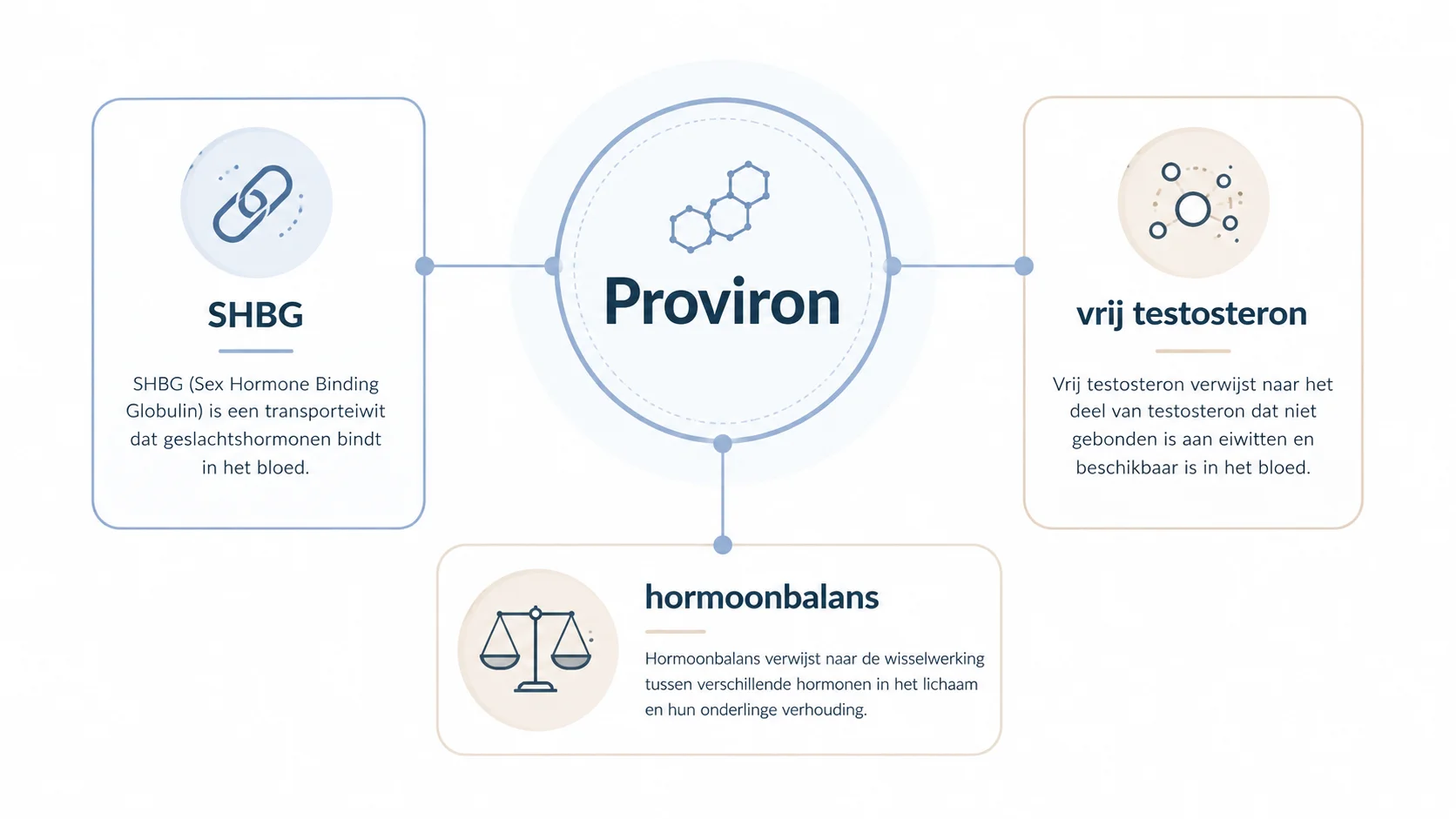
An important concept here is SHBG. SHBG binds to testosterone. A portion of your testosterone is therefore bound, and a smaller portion is freely available. Free testosterone is the part that is biologically more active. Proviron is often mentioned because it is associated with SHBG and free testosterone levels.
That doesn't mean Proviron works the same way as injecting testosterone. It doesn't increase total testosterone in the same way a testosterone preparation can. The topic revolves mainly around androgenic activity, free levels, and how hormones work in balance with each other.
Proviron and testosterone
Proviron is often discussed in relation to testosterone because many people are looking for more energy, libido, focus, or better hormone balance. Proviron also frequently comes up in conversations about free testosterone levels. Because of this, it seems immediately connected to testosterone for many readers, even though its mechanism of action is different.
When it comes to testosterone, it often involves total testosterone, free testosterone, and SHBG. Total testosterone is the total amount of testosterone in the blood. Free testosterone is the portion that is not strongly bound. SHBG is a binding protein. These three concepts help to better understand why some people find Proviron interesting.
For those who primarily want to know if symptoms could be indicative of a deficiency, one can first read about low testosterone symptoms. Those who want to learn more about natural steps, such as sleep, nutrition, training, and recovery, can continue at Increase testosterone.
Proviron and testosterone increase
Many search queries about Proviron revolve around increasing testosterone. It's important to distinguish this clearly. Naturally increasing testosterone means supporting your own hormone balance. Think about sleep, nutrition, strength training, stress reduction, and recovery. Proviron is not a lifestyle product and not a regular testosterone booster.
Proviron is more often discussed as an androgenic agent that influences how hormones are available in the body. This is a different angle than increasing your own testosterone through lifestyle. Therefore, it's wise to first clarify what you mean by “increasing testosterone.” Are you referring to symptoms, blood levels, athletic performance, libido, or general energy?
For practical lifestyle information, it fits Increase testosterone Better. For comparing hormonal agents, Proviron fits alongside topics such as Sustanon and Testosterone Enanthate/Cypionate.
Proviron versus Sustanon
Proviron and Sustanon are sometimes mentioned in the same conversations, but they are clearly different. Sustanon is an injectable testosterone mix. It contains multiple testosterone esters that release testosterone at different rates. Proviron is mestenolone, an oral androgen.
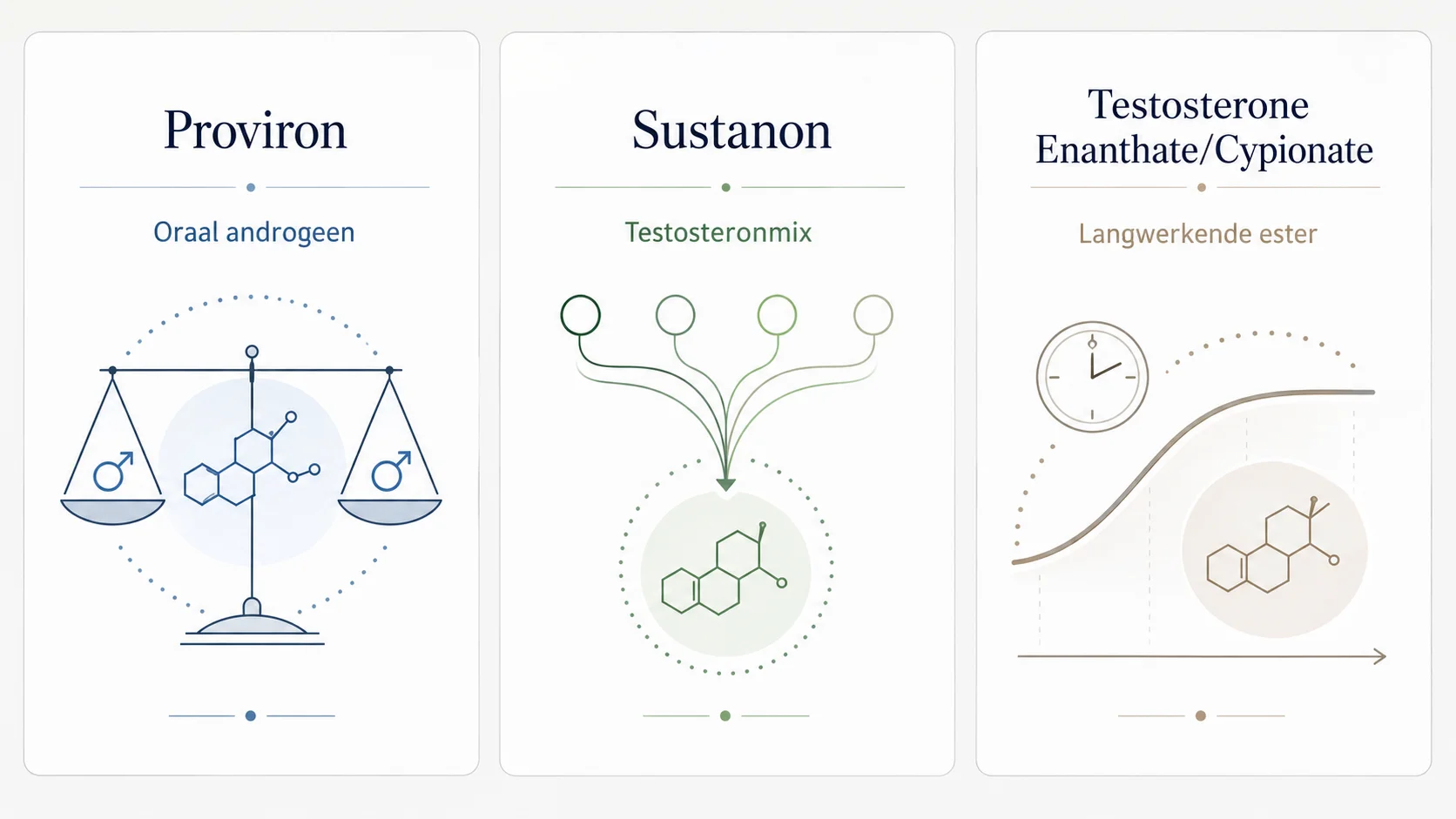
The difference, therefore, is not only in form but also in function. Sustanon delivers testosterone. Proviron functions more as a separate androgen and is often discussed in relation to SHBG, free testosterone levels, and libido. Consequently, both substances have different roles within the topic of testosterone.
If you want to compare testosterone forms, you can also look at Testosterone Enanthate and Testosterone Cypionate. This page goes deeper into long-acting testosterone esters.
Proviron versus Testosterone Enanthate and Cypionate
Testosterone Enanthate and Testosterone Cypionate are long-acting ester forms of testosterone. They are often discussed in the context of TRT, sports, and hormone balance. Proviron belongs in a different category. It is not an ester of testosterone, but mesterolone.
Therefore, you cannot directly compare Proviron to Enanthate or Cypionate. The question is not just which is “stronger” or “better,” but primarily what the goal is. Is it about supplementing testosterone, understanding free testosterone levels, libido, SHBG, or overall hormone balance? Each topic requires a different explanation.
A clear explanation of long-acting testosterone forms is provided below. Testosterone Enanthate and Testosterone Cypionate.
What are the key considerations for Proviron?
At Proviron, it is especially important to note that it is not a common supplement. It is a hormonal agent. This means it can influence bodily processes. Consider libido, skin, mood, hair loss (if predisposed), and hormone levels. These points are not intended to deter, but to fully inform.
Since Proviron is often discussed in relation to testosterone, it's wise to not just look at one value or one experience. Hormones work together. Sleep, nutrition, training, stress, age, and overall health all play a role. A complaint such as decreased libido or less energy, therefore, doesn't necessarily stem directly from testosterone or SHBG.
A good choice starts with good information. First, understand what Proviron is, how it differs from testosterone, and why it is mentioned. Then, you can better assess which information is truly relevant to your situation.
 English
  Dutch
Dutch