
In the sports world, substances such as Sustanon, Testosterone Enanthate and Testosterone Cypionate and Proviron. These names are often used in the same context, but they are not the same. Their function, application, and points of attention differ per substance. Therefore, it is important to clearly distinguish between endogenous testosterone, medical testosterone therapy, and non-medical use.
What does testosterone do in the body?
Testosterone is an androgen hormone. This means it influences male sex characteristics, but the hormone does more than that. It plays a role in muscle mass, bone strength, red blood cells, libido, mood, and recovery. Men produce most of their testosterone in the testes. Women also produce testosterone, but in smaller amounts.
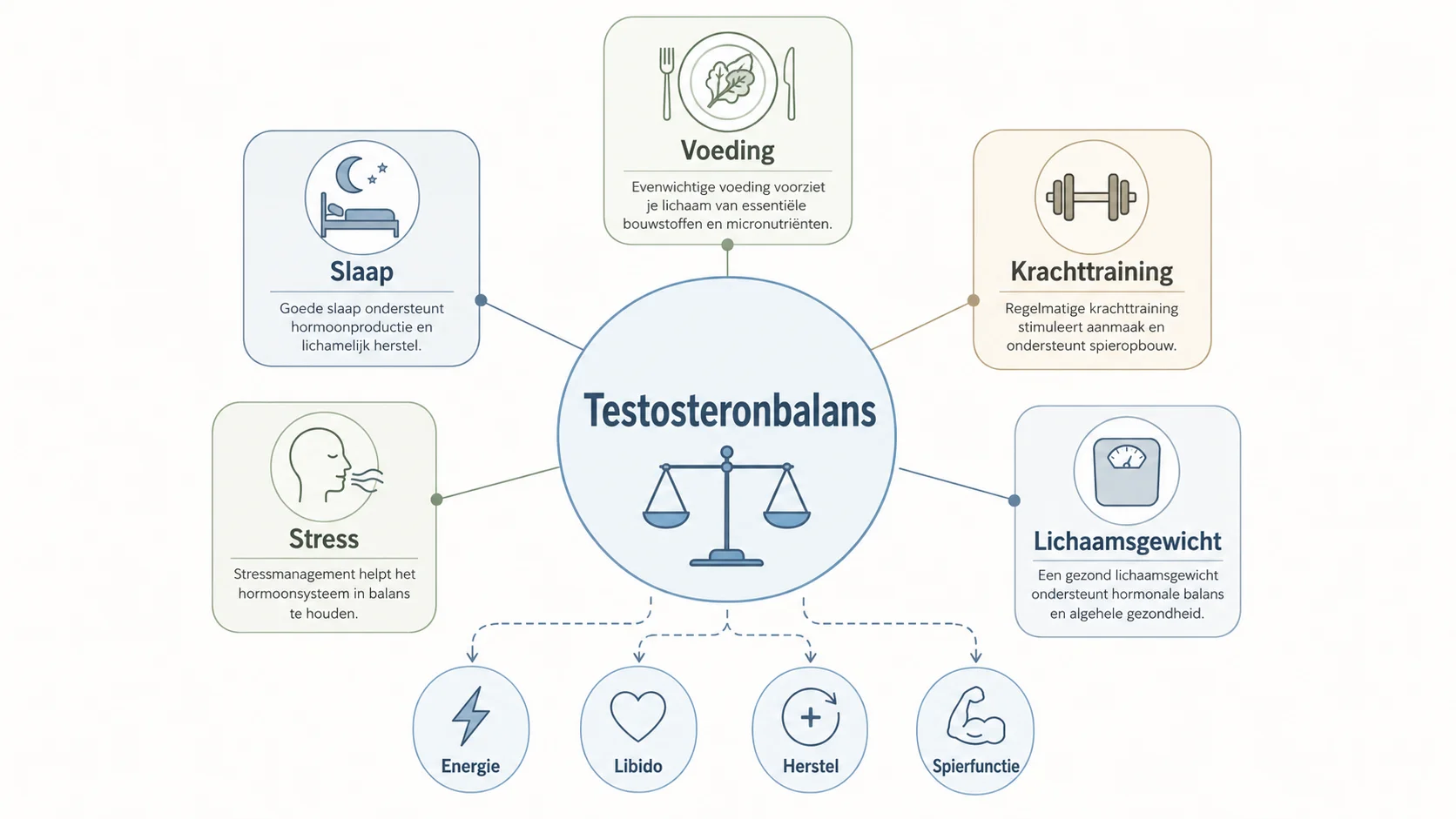
For athletes, testosterone is particularly interesting due to its role in muscle building and recovery. However, testosterone never works alone. Training, nutrition, sleep, and overall health collectively determine how well your body recovers and performs. Someone who trains hard but sleeps little or eats too little may still feel drained. This can happen even if testosterone levels are not significantly abnormal.
Do I have low testosterone?
Many men seek treatment for low testosterone because they recognize symptoms. Think of reduced libido, fewer morning erections, fatigue, low mood, decreased muscle strength, increased belly fat, or slower recovery after training. These symptoms can be indicative of low testosterone levels, but they are not specific enough to self-diagnose.
Stress, sleep deprivation, overtraining, alcohol, medication, illness, and strict dieting can cause similar symptoms. Therefore, it is wise to consider the whole picture, not just testosterone levels. How long have you had these symptoms? Are you sleeping well? Are you eating enough? Are you overtraining? Are you taking medication? Have you lost a lot of weight? Such questions are important before drawing conclusions.
If symptoms persist or clearly affect your daily life, testing may be useful. Especially with low libido, erectile dysfunction, fewer morning erections, fertility concerns, or significant fatigue, it is advisable to seek medical advice. An overview of signs can be found at low testosterone symptoms.
Is my testosterone level too low?
A blood test can raise questions. Many men mainly look at total testosterone, but that value doesn't always tell the whole story. The results should be viewed in combination with symptoms, age, time of measurement, sleep, stress, illness, and other blood values. Testosterone fluctuates throughout the day, which is why it's usually measured in the morning.
A one-time low or threshold value does not immediately indicate a persistent deficiency. Sometimes a repeat measurement is necessary. Free testosterone and SHBG can also help to better understand the results. LH and FSH can provide information about the stimulation of the testicles. A doctor can determine which values are needed and how the results should be interpreted.
The main point is simple: symptoms and blood values must be assessed together. A value without symptoms requires a different approach than clear symptoms with repeatedly low values. Drawing conclusions from a single test can lead to anxiety or wrong choices.
How can you naturally increase testosterone?
Naturally increasing testosterone starts with the basics. Sleep is one of the most important factors. Too little sleep can affect energy, recovery, appetite, and hormone balance. Nutrition also plays a role. A long-term calorie deficit, extremely low-fat eating, or insufficient protein can be detrimental to recovery and overall health.
Strength training can help support muscle mass and resilience. That doesn't mean more training is always better. Overtraining and insufficient recovery can actually be counterproductive. Endurance athletes, cyclists, runners, and triathletes in particular may experience issues when high training volume is combined with insufficient energy intake or inadequate rest.
Body weight also plays a role. Too much belly fat can be detrimental to hormone balance. At the same time, losing too much weight can also cause complaints. The goal is therefore not to reach the lowest possible body fat percentage, but to find a healthy balance between training, nutrition, and recovery. Practical explanation can be found at Increase testosterone.
Testosterone boosters warrant a critical look. Many products promise more energy, libido, or muscle growth, but the substantiation is often limited. Some substances may be helpful if you have a deficiency, such as vitamin D or zinc. However, supplementing a deficiency is different from significantly increasing testosterone. Therefore, always read carefully what a product does and be aware of potential risks.
Does testosterone therapy help?
Testosterone therapy is often called TRT. TRT stands for testosterone replacement therapy. It is intended for men with symptoms and repeatedly low testosterone levels. The goal is to treat a medical deficiency. Therefore, it is different from using testosterone for athletic performance or appearance.
TRT can be used in various forms, such as gels or injections. Each form has its own considerations. Gels are usually used daily and require careful application. Injections work differently and can cause peaks and troughs, depending on the form and schedule. Commonly mentioned names include Sustanon and Testosterone Enanthate and Testosterone Cypionate.
Testosterone therapy requires medical supervision. A doctor can monitor symptoms, blood values, red blood cells, blood pressure, and potential side effects. Fertility is also important. External testosterone can inhibit the body's own production and sperm production. Men who wish to have children should always discuss this before treatment begins.
What is the difference between increasing testosterone and using testosterone?
Increasing testosterone through lifestyle means you're trying to support your natural hormone balance. This includes sleeping better, getting stronger, eating enough, reducing stress, and supplementing deficiencies. Using testosterone means testosterone is being added from an external source. That's a big difference.
When testosterone is used exogenously, the body can reduce its own production. This can cause complaints during use or after stopping. Therefore, it is important not to confuse medical application, sports-oriented use, and general lifestyle advice.
Also, substances mentioned alongside testosterone deserve an explanation. Proviron is often discussed in relation to hormone balance, for example, but it is not a standard testosterone replacement. Its role and effects are different from injectable forms of testosterone.
Testosterone in women
Women also have testosterone. The amount is lower than in men, but the hormone also plays a role in women. Think about libido, energy, mood, muscle function, and bone health. Complaints due to hormonal changes can be different in women and require a different assessment.
Women must be extra careful with substances that increase androgens. Improper use can lead to complaints such as acne, increased hair growth, voice changes, or menstrual cycle problems. Some changes may be long-lasting. Therefore, use or treatment should always be carefully evaluated.
When is medical advice advisable?
Medical advice is advisable for persistent complaints such as low libido, erectile dysfunction, fatigue, depression, reduced muscle strength, fertility problems, or complaints after previous use of testosterone or other hormonal substances. It is also advisable to discuss abnormal blood test results with a doctor.

Seek faster help for chest pain, severe shortness of breath, fainting, sudden neurological deficits, severe psychological distress, or jaundice. These symptoms require medical evaluation. Testosterone is an important hormone, but it is not a topic to be assessed solely based on the internet or isolated lab values.
 English
  Dutch
Dutch